
Free Medical Check-Up Program Strengthens Healthcare Services, Reaches Over 100 Million Citizens


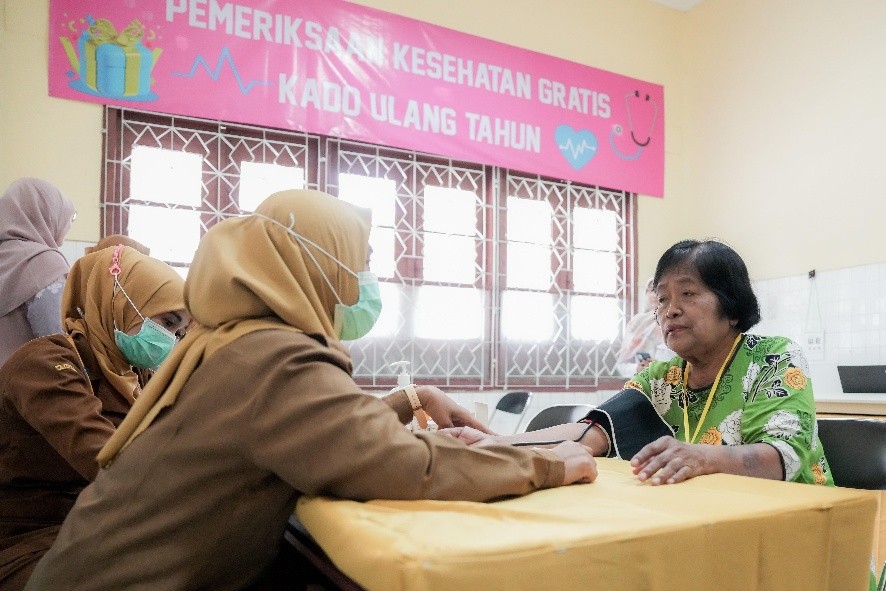
In a bid to enhance public health quality, the Government has continued to expand public access to healthcare services through the Free Medical Check-Up (CKG) Program.
Under President Prabowo Subianto’s and Vice President Gibran Rakabuming Raka’s administration, this program becomes part of national transformation efforts through the strengthening of preventive healthcare services, aiming to assist people in detecting disease risks at an early stage and getting appropriate treatment.
Launched on Tuesday (10/02) as a quick-win program, CKG provides free medical check-ups for the public, from newborns to senior citizens, with age- and condition-appropriate tests, available through community health centers, community-based activities, and schools.
Through this program, the Government not only expands public access to medical check-ups but also promotes a shift in service approach from treatment-oriented to prevention-oriented. It aligns with the Asta Cita (eight missions) agenda to generate healthy, productive, and high-quality human capital and strengthen lifelong social protection.
Since its launch, CKG has continued to benefit more people. According to the Ministry of Health, 70.29 million people have received free medical check-ups through the program by December 29, 2025. This program has reached 38 provinces and 514 regencies/cities, supported with healthcare facilities across the country.
By the end of this July, 73.8 million people have undergone medical check-ups: 62.7 million through community health centers and community activities, and 11.1 million through schools. By early October, the number rose to 105,073,600 people, or 80.6 percent of this year’s target of 130,344,650.
President Prabowo Subianto has underscored the importance of early detection of disease risk factors, noting that CKG is a long-term investment to boost national productivity and reduce future medical costs.
“[CKG] is a productivity-increasing program. Experts told me that in the long run, we will save billions of US dollars,” he said in his remarks at the World Economic Forum (WEF) in Davos, Switzerland, on January 22, 2026.
The President also stressed that CKG is a rational policy that focuses on long-term benefits, not merely a populist program. By identifying disease risk factors earlier, people are expected to receive treatment before their health conditions decline and require higher medical costs.
The benefits of early detection through CKG have become apparent. In August 2026, the Ministry of Health reported one million new hypertension cases and 188,000 new diabetes cases, all previously undetected, identified through repeated medical check-ups among 9.2 million and 8.3 million participants, respectively.
These findings demonstrate the importance of regular check-ups, even for people who feel healthy and experience no symptoms, to identify risks before their condition worsens, since hypertension and diabetes can develop without clear symptoms.
The program has also benefited approximately 15.2 million students as of August 2026. The medical check-ups conducted on students found that dental caries is one of the most common problems among students, affecting 40.9 percent, followed by anemia, blood pressure problems, and obesity.
The data can serve as a basis for the Government, schools, parents, and healthcare workers to strengthen prevention measures and provide appropriate treatment for students, ultimately supporting their health and development.
As the program reaches more people, the Government strengthens service continuity so CKG goes beyond mere screening, encompassing health education, treatment, monitoring, and referrals for participants who require further care.
To follow up on CKG, the Government provides 15 days of free treatment through the National Health Insurance (JKN) mechanism for participants found to have health problems.
Furthermore, Decree of Minister of Health Number HK.01.07/Menkes/84/2026 on Technical Guidance on Free Medical Check-Up was issued on February 9, 2026 to enhance the implementation of CKG program.
Follow-up actions on CKG are imperative to ensure its benefits reach more people. Thus, the Government continues to face the challenges of maintaining treatment continuity, providing equitable access to healthcare facilities, ensuring availability of healthcare workers, and encouraging participants to comply with requirements needed to undergo examinations and follow-up treatment.
CKG serves to bring about tangible benefits to the people. Through expanded access to early detection and enhanced treatment and monitoring, this program aims to improve public well-being, increase human capital quality, and strengthen the foundation of national health in pursuit of the 2045 Golden Indonesia vision. (DAF-PR of Ministry of State Secretariat) (DH/TM)