
Gov’t Strengthens Tsunami Early Warning System Following Flores Earthquake


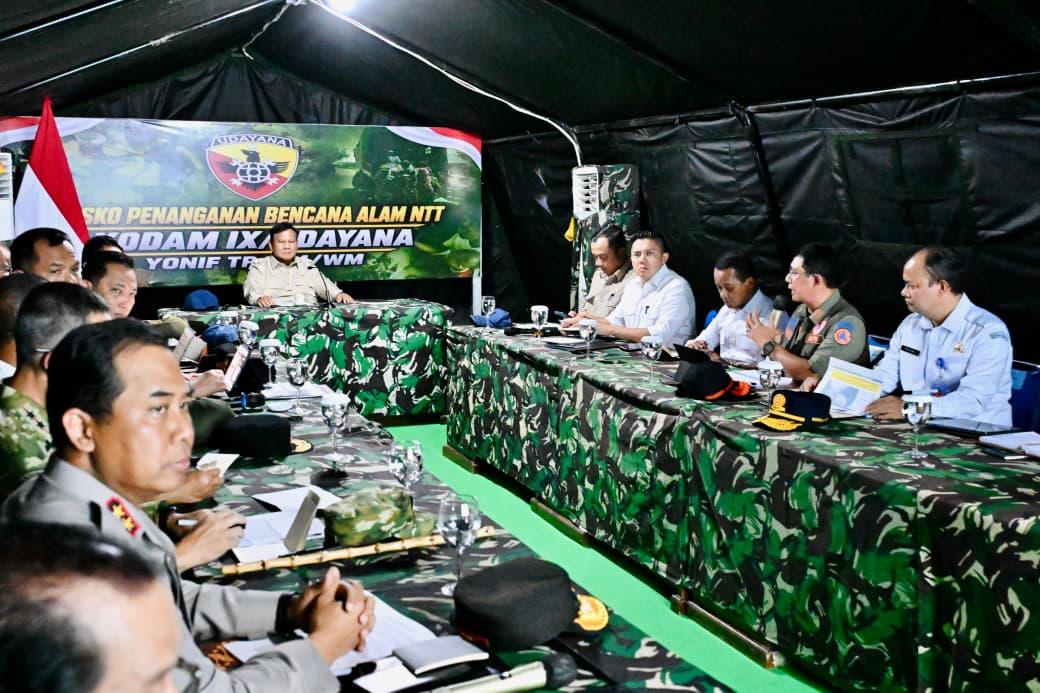
The Government is strengthening disaster response and earthquake mitigation on Flores Island, East Nusa Tenggara (NTT) province, including through the tsunami early warning system. In a report to President Prabowo Subianto on Wednesday (08/26), Head of the Meteorology, Climatology, and Geophysics Agency (BMKG) Teuku Faisal Fathani reported that the early warning system had operated rapidly since the earthquake occurred.
“When an earthquake occurs, we must inform and communicate where a tsunami is likely to occur in less than three minutes. Exactly two minutes and 16 seconds after the earthquake, BMKG announced the warning through all channels and all media, so that the public can take rescue measures before the tsunami arrived,” said Teuku.
According to him, the speed of the warning system contributed to minimizing the impact of the tsunami that occurred in several areas. He also reported that a tsunami occurred in several areas in the northern part of Flores Island, with waves reaching up to 2.5 meters in height.
“This is a positive development compared with the same event in 1992, which had a magnitude of 7.8 and a depth of 32 kilometers, and resulted in up to 2,000 casualties, particularly due to the tsunami. Now, because we have 2,000 main operational sensors related to seismic activity, with 175 of them in this province, we are able to provide effective warnings to the public,” he said.
In addition to ensuring the readiness of the early warning system, the Government is also providing education to ease public concerns about the potential for other major earthquakes or tsunamis. Together with regional governments, the BMKG continues to provide accurate information to the public about seismic conditions.
“The public was so worried that BMKG staff were kept at command posts to make them feel comfortable and calm, fearing aftershocks and so on. Now people are beginning to return home. Their houses are mostly one-story and widely spaced. Some come to the posts to collect aid, but they return home if the damage is light and not dangerous. This is the kind of understanding we are providing,” he explained. (BPMI) (EST/AW)