
Maintaining Budget Deficit Below 3%, Gov’t Anticipates Energy Price Soaring


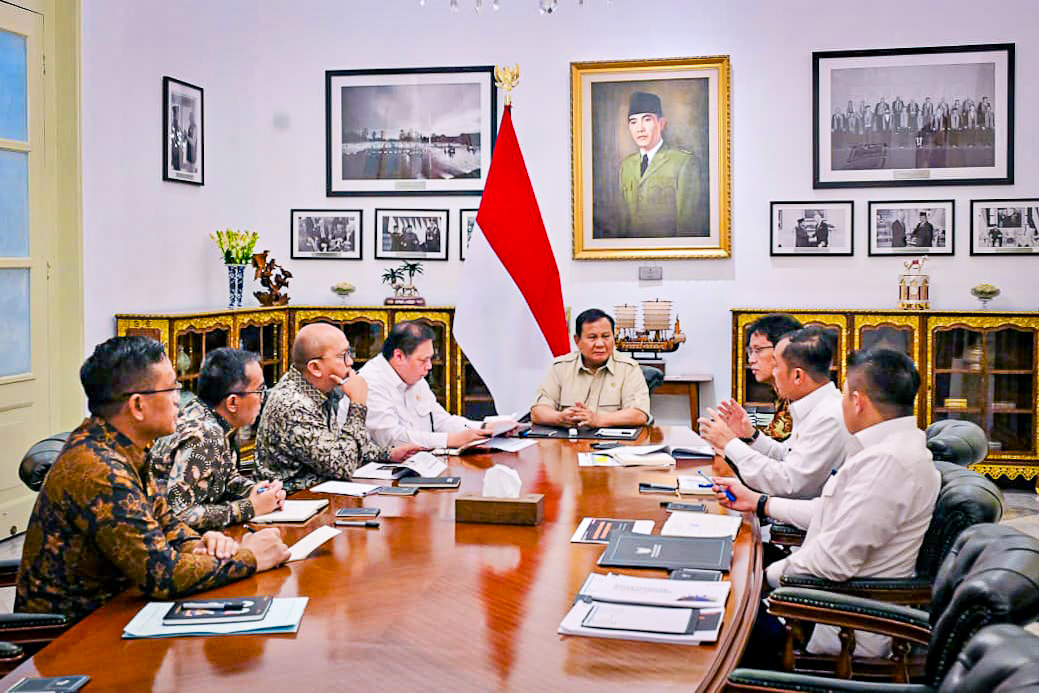
President Prabowo leads a meeting to discuss fiscal policy at Merdeka Palace, Jakarta, on Thursday (03/19).
The Government continues to strengthen national fiscal resilience amid global dynamics, including rising energy prices. This was conveyed by Coordinating Minister for Economic Affairs Airlangga Hartarto following a meeting with President Prabowo Subianto at the Presidential Palace Complex in Jakarta on Thursday (03/19).
The Coordinating Minister explained that the President emphasized the importance of maintaining the State Budget (APBN) deficit below 3 percent. To achieve this, the government is implementing efficiency measures across ministries and agencies.
“We are maintaining the APBN deficit below 3 percent aligned with the President’s directives from the Cabinet Plenary Session. This has been coordinated with related ministries, and efficiency measures across ministries and agencies will ensure the deficit remains within the target,” said Airlangga.
In addition, the Government is preparing anticipatory measures to address the impact of rising fuel prices and other commodities. One of the measures includes increasing coal production volumes.
“The President has also requested an increase in coal production volumes, which will involve adjustments to the RKAB (Work Plan and Budget),” he added.
The Government is also reviewing policies related to coal export taxes to enhance state revenue, considering its rising commodity prices.
In the energy sector, the Government is accelerating the conversion of diesel power plants (PLTD) to solar power plants (PLTS) as an efficiency measure amid high oil prices. This initiative has been assigned to Danantara for implementation.
Furthermore, the government is considering flexible working arrangements through a work-from-home (WFH) scheme for one day out of a five-day workweek. This policy is expected to reduce fuel consumption by up to 20 percent.
“There are significant savings in fuel consumption from reduced mobility—approximately one-fifth of normal usage,” Airlangga stated.
He added that the WFH scheme is not only intended for civil servants but is also expected to be adopted by the private sector and regional governments. The government is currently finalizing these policies and will provide more detailed information once all concepts are completed.
These measures reflect the government’s adaptive, measured, and proactive approach to maintaining economic stability while strengthening the foundation for energy independence and national resilience.
(BPMI of Presidential Secretariat) (RD/LW)