
President Prabowo Highlights Strategic Dialogue as Key to Maintaining Indo-Pacific Peace


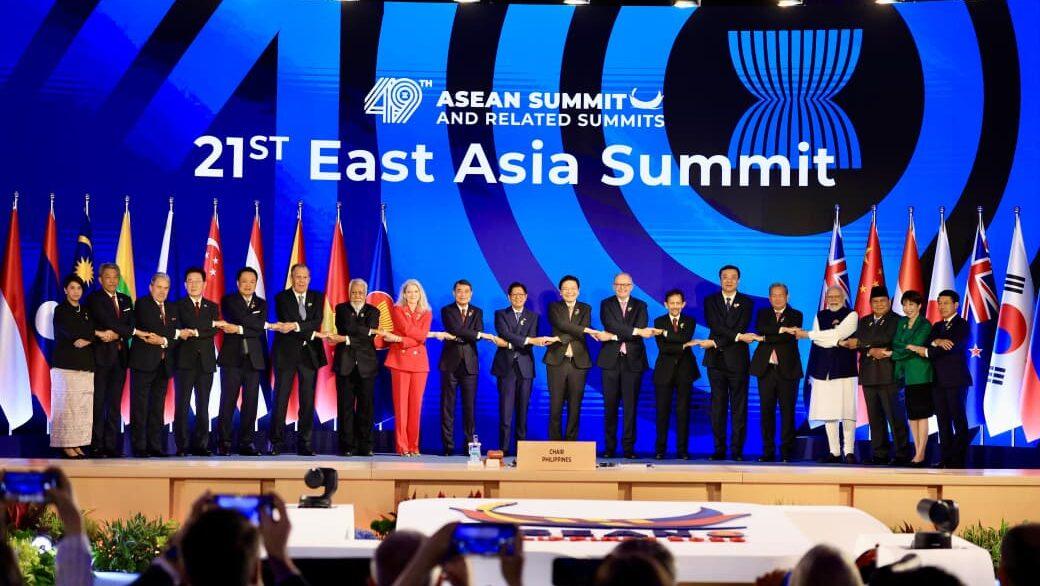
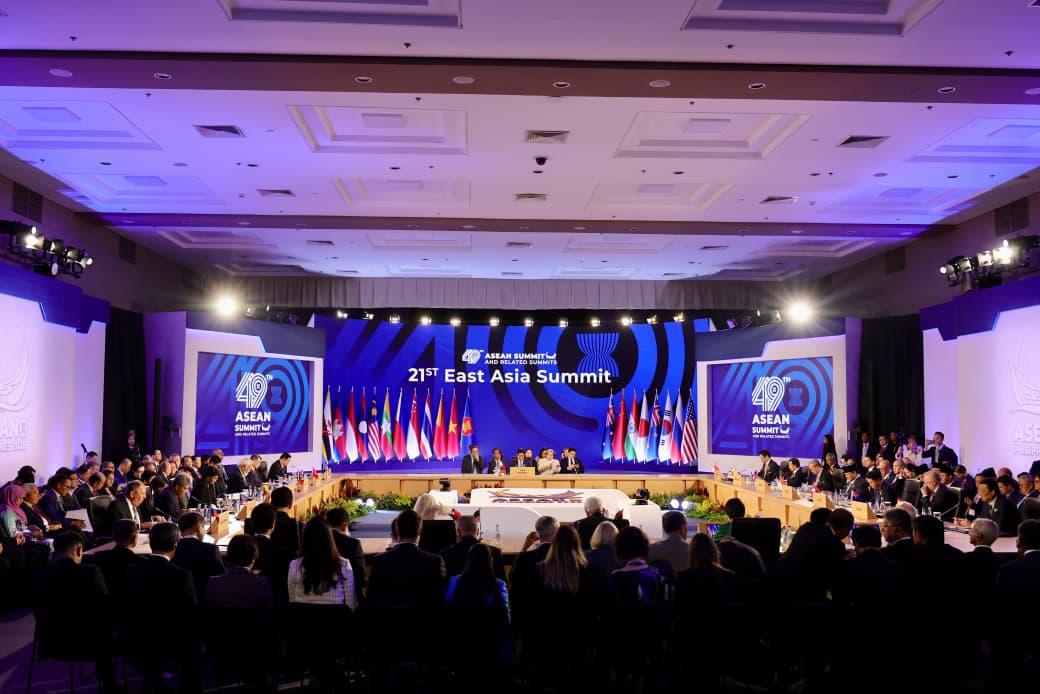
President Prabowo Subianto emphasized the importance of dialogue, strategic trust, and concrete cooperation in maintaining peace and stability in the Indo-Pacific region. The President delivered the remarks during his intervention at the 21st East Asia Summit (EAS) held at the Philippine International Convention Center (PICC), Manila, the Philippines, on Tuesday (11/17).
The President recalled that more than two decades ago, EAS participating countries had chosen dialogue over confrontation. According to the Head of State, that spirit is increasingly relevant amid current geopolitical dynamics, as any conflict in the Indo-Pacific would bring widespread repercussions for the global economy and people’s lives around the world.
“The reality is clear: any conflict in the Indo-Pacific will carry far-reaching and devastating consequences. The global economy would be impacted, our peoples would bear the brunt, and no single nation would be immune,” the President stated.
The President affirmed that nations across the region remain deeply interconnected. Consequently, the EAS held a vital role as a forum for leaders to engage in open and constructive dialogue, manage differences, prevent miscalculations, and build strategic trust.
“Through these interactions, we can better anticipate emerging strategic challenges, deepen mutual understanding, and find common ground and shared interests. This is the true strength of the EAS,” the President stated.
With ASEAN centrality as its foundation, the President noted that the EAS could provide an inclusive and open forum for major powers without taking sides. However, such inclusivity must be anchored in respect for international law, sovereignty and territorial integrity, and the peaceful settlement of disputes.
The Head of State also underscored that strategic trust must be translated into concrete cooperation that delivers tangible benefits for the people. Through the ASEAN Outlook on the Indo-Pacific, EAS participating states can bolster maritime cooperation, connectivity, and regional resilience.
“We can leverage our collective strengths to diversify critical supply chains, ensure access to essential resources, and keep maritime lanes open and secure,” the President said.
According to him, disruptions to energy supplies or maritime routes can rapidly affect food production, trade, and people’s livelihoods. Therefore, the EAS, which brings together major producer, consumer, and trading nations, possesses significant opportunity to deliver joint solutions.
Concluding his remarks, the President called upon all EAS leaders to preserve strategic trust and prioritize shared interests in pursuit of a peaceful, stable, and prosperous Indo-Pacific.
The President’s message reaffirmed Indonesia’s stance that the Indo-Pacific must be a region of cooperation, not an arena of confrontation; a region that unites interests, rather than deepening divisions. (BPMI of Presidential Secretariat) (YA/AW)