
Gov’t Continues to Strengthen Response for NTT Earthquake Victims, Meet Public’s Basic Needs, Ensure Public Services


The Government continued to strengthen its response to the impacts of the Magnitude (M) 7.7 earthquake that struck several areas of East Nusa Tenggara (NTT) Province on Saturday (8/15). The response had been carried out in an integrated manner by ensuring that people’s basic needs were met, logistical assistance was distributed, educational services continued, and data collection on the disaster impacts was continuously updated as a basis for response efforts through the rehabilitation and reconstruction stages.
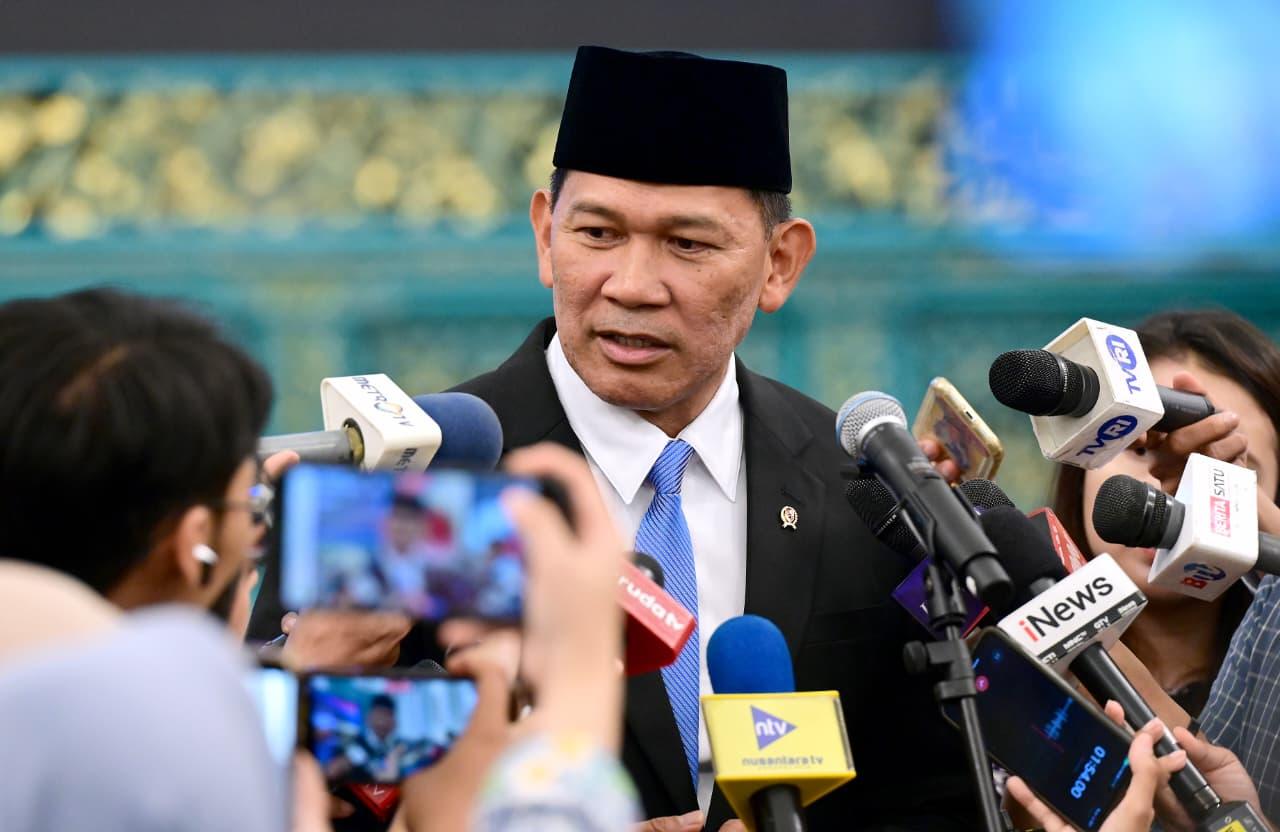
Minister of Home Affairs Muhammad Tito Karnavian ensured that the central government would not remain silent but will make efforts to overcome the disaster that affected communities and local governments in NTT. Several ministers, heads of government agencies, and leaders of state-owned enterprises had been directly involved since the first day following the earthquake, to ensure that the response was carried out effectively.
“The central government certainly will not remain silent. We are handling this disaster together,” said the Minister during his visit to the Earthquake Emergency Response Command Post in Maumere, Sikka Regency, NTT, on Wednesday (8/19).
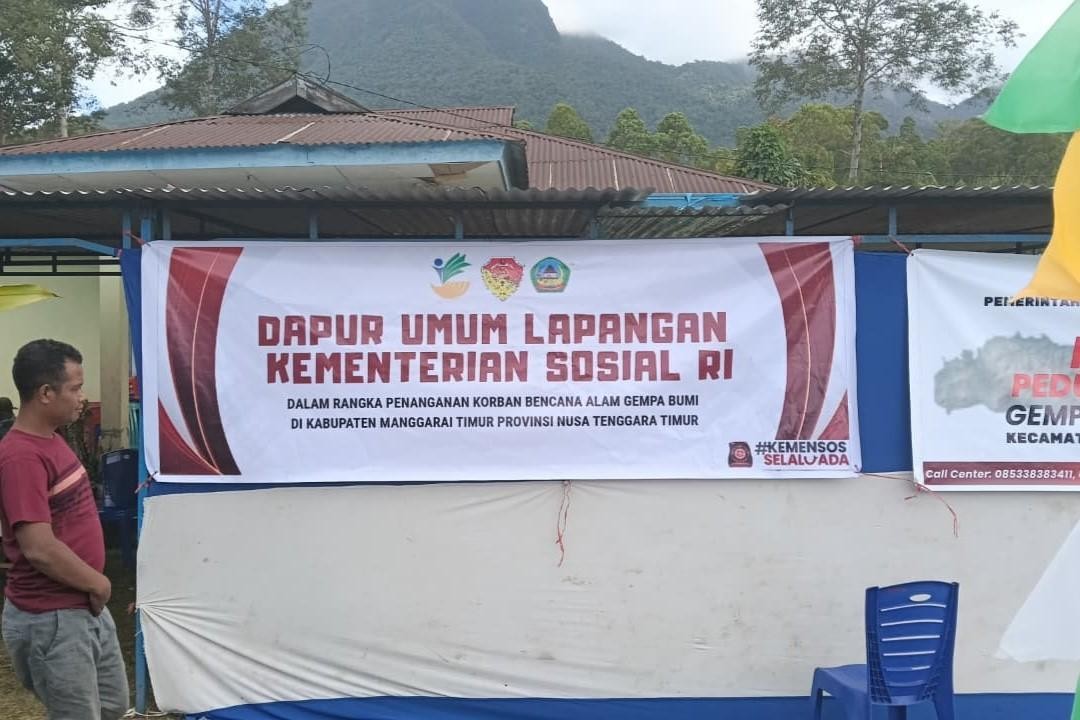
Regarding basic needs, the Ministry of Social Affairs had established public kitchens at three locations in East Manggarai Regency—Mano, Pota, and Dampek. Since August 19, the three kitchens had produced a total of 6,000 ready-to-eat meal packages per day for two meals a day. The Ministry had also distributed assistance, including rice, basic-needs packages, tents, blankets, mattresses, and other emergency supplies.
Minister of Social Affairs Saifullah Yusuf emphasized that meeting basic needs was a priority in the disaster response in NTT.
“In responding to the disaster in NTT, meeting the basic needs of affected victims is one of the important priorities. Our teams continue to work to ensure that people’s basic needs are met by distributing logistical assistance and establishing public kitchens,” said the Minister in Jakarta on Thursday (8/20).
In Nagekeo Regency, as of August 19, the Government, through the Ministry of Social Affairs, continued to serve affected residents in evacuation centers, distribute assistance, operate public kitchens, and assess community needs. The response covered seven affected districts, namely Boawae, Mauponggo, Keo Tengah, Wolowae, Aesesa, Aesesa Selatan, and Nangaroro, providing services for 3,042 households or 12,170 people.
The Government also ensured that affected children retain their rights to have access to education while prioritizing the safety of teachers and students. The Ministry of Primary and Secondary Education had deployed support for learning activities in several disaster-affected areas.
As of August 19, the disaster had affected 512 educational institutions, 94,452 students, and 8,755 teachers and education personnel across seven regencies.
“The priority and commitment of the Ministry of Primary and Secondary Education are the safety of teachers and students in disaster-hit areas. Therefore, learning activities must also take their safety into account. One approach is to implement an emergency learning system using an emergency curriculum,” said Minister of Primary and Secondary Education Abdul Mu’ti in Jakarta on Wednesday (8/19).
In addition to meeting basic needs, the Government provided psychosocial support for children affected by the disaster. On August 20, the Ministry of Social Affairs, through the Efata Kupang Center, provided psychosocial support services to approximately 20 children at the independent evacuation post at Stella Maris in Nagekeo Regency.
Meanwhile, the National Disaster Management Agency (BNPB) continued to conduct assessments and inspections of affected areas, including Kuwus District in West Manggarai. In addition to identifying community needs, BNPB had also distributed assistance, including aid from the President, to affected residents.
The Government also strengthened data collection as a basis for accelerating the distribution of assistance and implementing follow-up measures. The Minister of Home Affairs had instructed local governments to update data on damage to houses, schools, places of worship, health facilities, government buildings, and other infrastructure and public facilities. He assured that the central government would continue to oversee the disaster response through the rehabilitation and reconstruction stages, so that affected communities can recover and resume their lives as soon as possible.
(Public Relations of Ministry of Social Affairs, Ministry of Primary and Secondary Education, BNPB, Ministry of Home Affairs/DND/MAN—Public Relations of Ministry of State Secretariat) (RD/TM)