
President Prabowo Plans Strategic Minerals Exchange to Strengthen Indonesia’s Global Market Position


The Government intends to strengthen Indonesia’s position in global strategic commodity trade by establishing a domestic exchange for minerals and strategic commodities, according to President Prabowo Subianto.
The President conveyed that the policy aims to ensure that Indonesia is not merely a producer, but also plays a greater role in determining commodity prices, which have historically been largely determined by overseas markets.
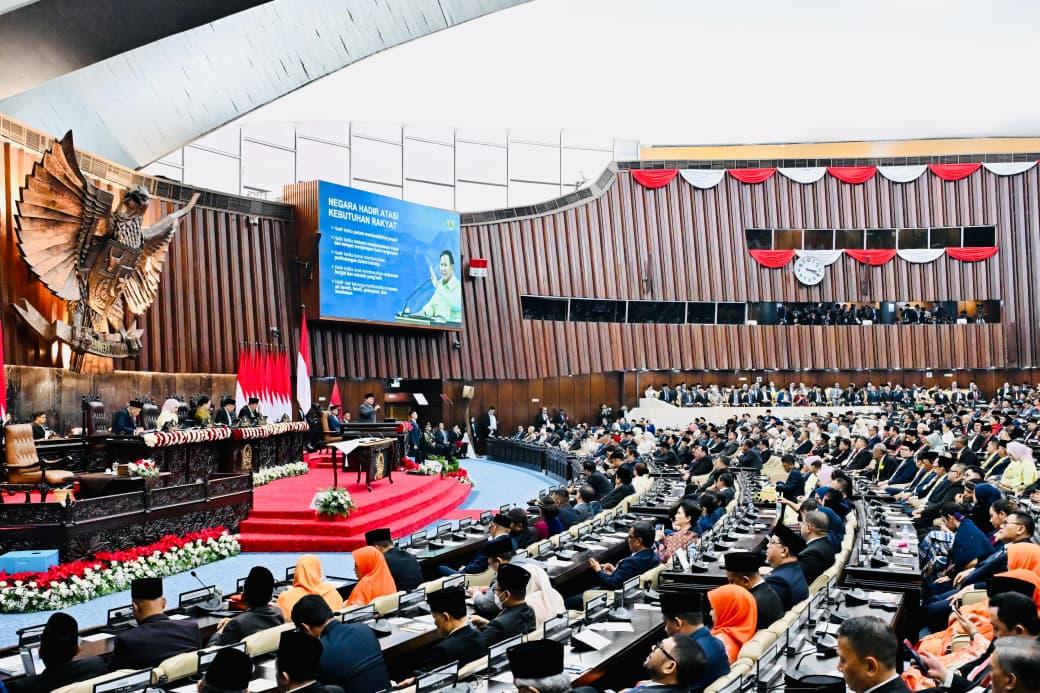
“I announce the next phase of our single gateway export policy. We have discussed with the Financial Services Authority (OJK) that we will soon have a Strategic Mineral and Commodity Exchange,” President Prabowo said while delivering the Government’s statement on the Bill on the State Budget (APBN) for Fiscal Year 2027, along with the Financial Note and supporting documents, at the Plenary Session opening the First Session Period of the House of Representatives (DPR RI) for the 2026–2027 legislative year, which was held at the Nusantara Building, Parliament Complex, Jakarta, Friday (08/14).
President Prabowo went on to say that for decades Indonesia has been one of the world’s largest producers of palm oil, nickel, tin, coal, gold, coffee, rubber, and various other commodities. As a major commodity producer, Indonesia therefore needs its own trading instruments to strengthen its bargaining position in the global market.
“With the support of the House of Representatives, we plan to have our own Commodities Exchange operational by January 1, 2027. We are targeting the completion of regulations governing the operation of the Strategic Minerals and Commodities Exchange,” the President stated.
The President underscored that the exchange will serve as the foundation for establishing an “Indonesia Reference Price,” a national benchmark for various key export commodities.
The Government aims to develop a market that is deep, transparent, liquid, and trusted by international market participants, enabling producers, farmers, exporters, buyers, and investors to interact within a single system with greater transparency in transaction data.
In addition to establishing a commodities exchange, the Government will continue capital market reforms through demutualization.
The move, he added, aims to bring Indonesia’s capital market closer to international standards while creating greater opportunities for startups, entrepreneurs, and domestic businesses to access additional capital and expand their operations.
“Demutualization will elevate Indonesia’s capital market to global standards and position it as one of the largest in the world,” the President stated.
On that occasion, President Prabowo also announced that the Government would continue optimizing State-Owned Enterprise (SOE) assets. He noted that 290 SOEs deemed unproductive and failing to generate added value for the nation had already been closed. The Government targets a leaner SOE sector by the end of 2026, comprising no more than 300 productive enterprises.
President Prabowo also emphasized that underutilized SOE assets, ranging from land, buildings, and networks to industrial zones and other facilities, must not remain idle while the public needs jobs and the economy requires investment.
Accordingly, the Government will open opportunities for the private sector to manage these assets through open, competitive, and accountable processes, while maintaining the State’s strategic ownership.
“We will open up opportunities for unproductive assets currently held by SOEs to be managed by the private sector across Indonesia,” said President Prabowo.
Through the establishment of a minerals and strategic commodities exchange, capital market reforms, and the optimization of SOE assets, the Government aims to strengthen Indonesia’s position in the global trade chain. Indonesia seeks to move beyond being merely a producer of commodities to becoming a trading hub with greater capacity to determine value and capture economic benefits from its national wealth.
“We do not merely want to be a global commodity producer; we must play a role in determining global commodity prices. We want Indonesia to become a place where commodities are traded,” the President concluded. (BPMI of Presidential Secretariat) (RIF/AW)