
Rupiah Undervalued, Bank Indonesia Prepares Seven Strengthening Measures


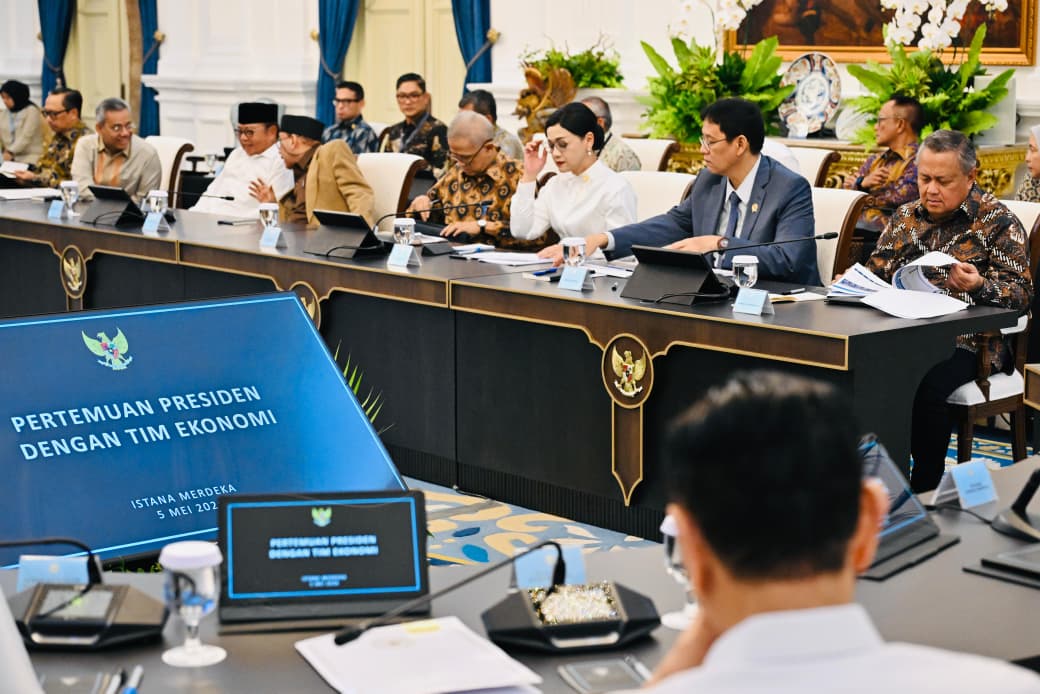
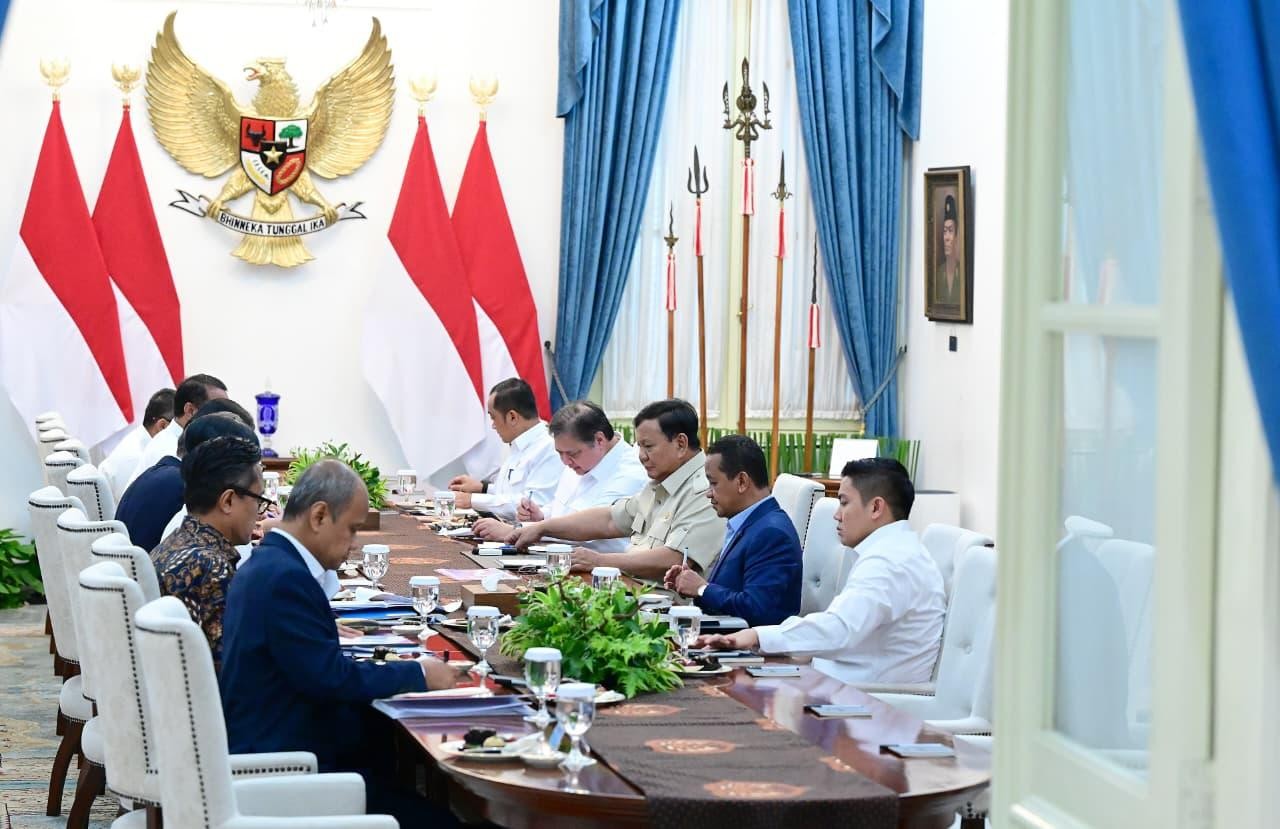
President Prabowo Subianto holds a limited meeting with ministers of Red and White Cabinet and the Financial System Stability Committee at Merdeka Palace, Jakarta, Tuesday (5/5) (Photo by: BPMI of Presidential Secretariat)
Governor of central bank Bank Indonesia Perry Warjiyo expressed optimism about the rupiah exchange rate outlook.
At the limited meeting chaired by President Prabowo Subianto at Merdeka Palace, Jakarta, Perry stated that the rupiah is currently undervalued and poised to strengthen following the robust national economic fundamentals.
“As mentioned by the Coordinating Minister, our fundamentals are strong. [Our economy is] Very high with growth at 5.61 percent, low inflation, high credit growth, strong foreign exchange reserves. These fundamentals indicate the rupiah should be stable and tend to strengthen,” he said on Tuesday (5/5).
Perry Warjiyo further explained short-term rupiah pressures from global and seasonal factors, including demand spikes from dividend repatriation, debt payments, and Hajj pilgrim needs which also boost dollar demand.
“What causes short-term exchange rate pressure? First, high oil prices. Second, rising US interest rates. The 10-year US Treasury yield now stands at 4.47 percent. Plus the strengthening dollar,” he stated.
To address this, Bank Indonesia reported seven strategic measures to President Prabowo for rupiah strengthening: First, strengthening interventions in domestic and international forex markets for stabilization.
“Our foreign exchange reserves are ample, sufficient for rupiah exchange rate stabilization,” Perry explained.
Steps two and three focus on strengthening capital flows and fiscal-monetary coordination. According to Perry, Bank Indonesia encourages increased inflows through Bank Indonesia Rupiah Securities (SRBI) instruments to offset outflows from Government Securities (SBN) and stocks, while continuing SBN purchases in the secondary market.
“We have already purchased Rp123.1 trillion in SBN from the secondary market year-to-date. We will continue to coordinate, including with Minister of Financial for potential buybacks and other measures. Coordination between fiscal and monetary needs to be very tight,” Perry stated.
Steps four and five include maintaining loose banking liquidity while restricting domestic dollar purchases. “Previously US$100,000 per person per month, now reduced to US$50,000 per person per month. This was immediately coordinated with the Financial System Stability Committee (KSSK) for the implementation,” he continued.
Steps six and seven involve strengthening offshore market interventions and increased oversight of banking and corporate activities. Supervision is tightened through coordination with the Financial Services Authority (OJK) to ensure financial system stability is maintained.
“We monitor corporate banks with high dollar buying activity, we send supervisors in coordination with Chairperson of the OJK Frederika Widyasari to ensure financial system stability is maintained,” Perry added.
These measures underscore the Government and monetary authority’s proactive stance in safeguarding rupiah stability. Amid global pressures, Indonesia not only endures but prepares momentum for more solid strengthening ahead. (EST/LW)