
Gov’t Strengthens Energy Self-Sufficiency Through B50 Biodiesel, 100 GWp Solar Power Development


Energy independence is one of the main pillars for Indonesia to achieve economic resiliency and promote the nation’s sovereignty. Therefore, the Government continues to boost domestic natural resources, including biodiesel and solar energy, to be used to meet the national energy demand, particularly amid global oil price dynamics and global uncertainty.
The implementation of the mandatory B50 biodiesel policy and the development of solar power plants (PLTS) with a capacity of 100 gigawatt-peak (GWp) are the Government’s strategic initiatives aimed at strengthening energy self-sufficiency while reducing dependence on imported fuels.
Through the mandatory B50 program, the Government is promoting the use of fuel consisting of 50 percent biodiesel and 50 percent solar diesel. The program that was launched by President Prabowo Subianto in Karawang, West Java province, on July 9, 2026, is a strategic step toward achieving national energy independence.
“It’s not merely a matter of technology utilization but a proof that Indonesia is capable of managing its own natural resources for the benefit of its own people,” the President said.
The B50 biodiesel program is expected to reduce diesel import and save foreign exchange reserves. The development of the program also has the potential to stimulate economic activities and create jobs, from the plantation sector to the processing industry.
In a bid to ensure the program’s readiness for implementation, the Government has conducted trials across six sectors, namely automotive, agriculture, mining, maritime transportation, power generation, and railways. Regular evaluations are also carried out every three months to monitor the implementation and identify areas for improvement.
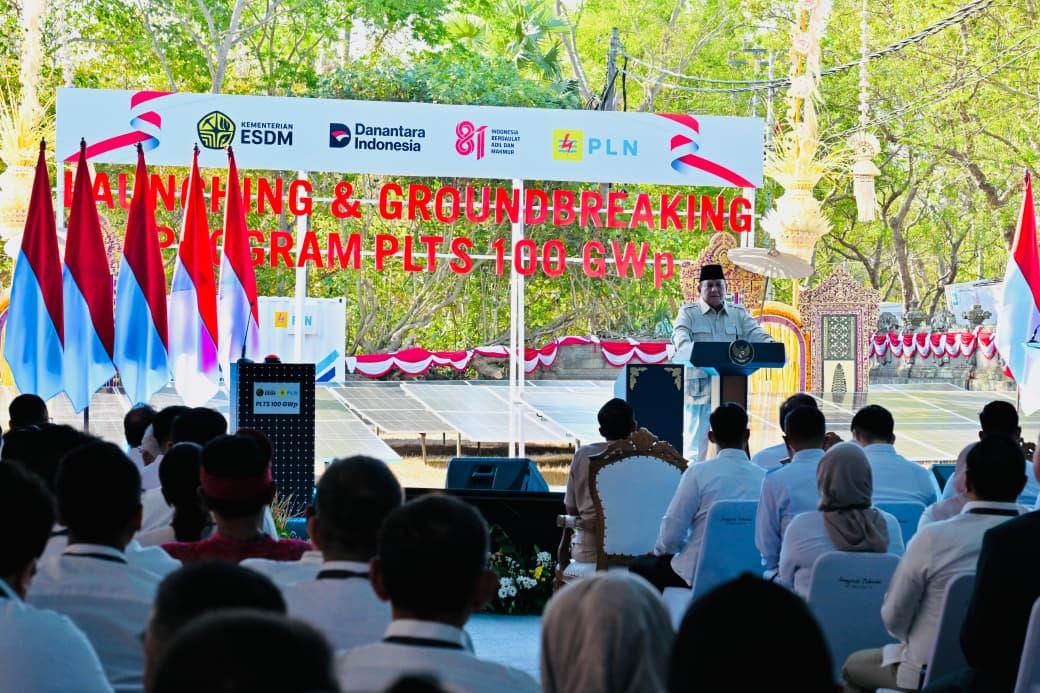
In addition to power diesel, the Government is also maximizing the potential of solar energy through a 100 GWp solar power plant development program. Launched by President Prabowo in Jembrana regency, Bali province, on August 25, 2026, the program aimed at strengthening the national electricity supply by utilizing renewable energy resources.
“Through a 100 GWp (solar power plant), we will truly become a nation that stands on its own two feet. We will not be concerned about developments may occur anywhere in the world,” he said.
For the record, the solar power has so far benefited many regions including through improved electricity services on Rengit Island that located in Bangka Belitung Islands province, from approximately 12 hours to 24 hours per day. Meanwhile, the program has also supported local economic activities by providing electricity for the use of fishers’ cold storage facilities and ice-making machines in Sembur Island that located in Riau Islands province.
The development of solar power plants can also reduce power generation fuel costs, lower greenhouse gas emissions, and create employment opportunities. Through energy storage batteries, solar power plants can also supply electricity at night or during cloudy weather. Their development can take various forms, including floating solar power plants and rooftop solar panels.
Through various efforts ranging from utilizing domestic raw materials for biodiesel production to optimizing solar energy for power generation, the Government strives to reduce Indonesia’s dependence on foreign energy supplies while increasing the added value of domestic resources.
As President Prabowo Subianto and Vice President Gibran Rakabuming Raka approaching the second anniversary of their administration, these two programs represent the Government’s concrete initiatives for a more independent, resilient, and sustainable energy system that supports public needs and national economic growth. (Public Relations of Ministry of Energy and Mineral Resources/ Public Relations of Ministry of State Secretariat – DND)