
Gov’t Closes Non-Compliant SPPGs to Strengthen Free Nutritious Program Quality


The Government continues to make comprehensive improvements to the management of the Free Nutritious Meals (MBG) program. ensuring that its expansion is accompanied by higher quality standards, stronger food-safety measures, and more accurate targeting of beneficiaries.
The Government’s latest concrete measures involve tightening operating standards for Nutrition Fulfillment Service Units (SPPGs).
Of the 27,485 SPPGs currently operating, the Government has assessed compliance with Hygiene and Sanitation Eligibility Certificates (SLHS) and adherence to the MBG program’s technical implementation guidelines.
A total of 833 SPPGs have been closed, while a further 455 are set for permanent closure for failing to meet SLHS requirements.
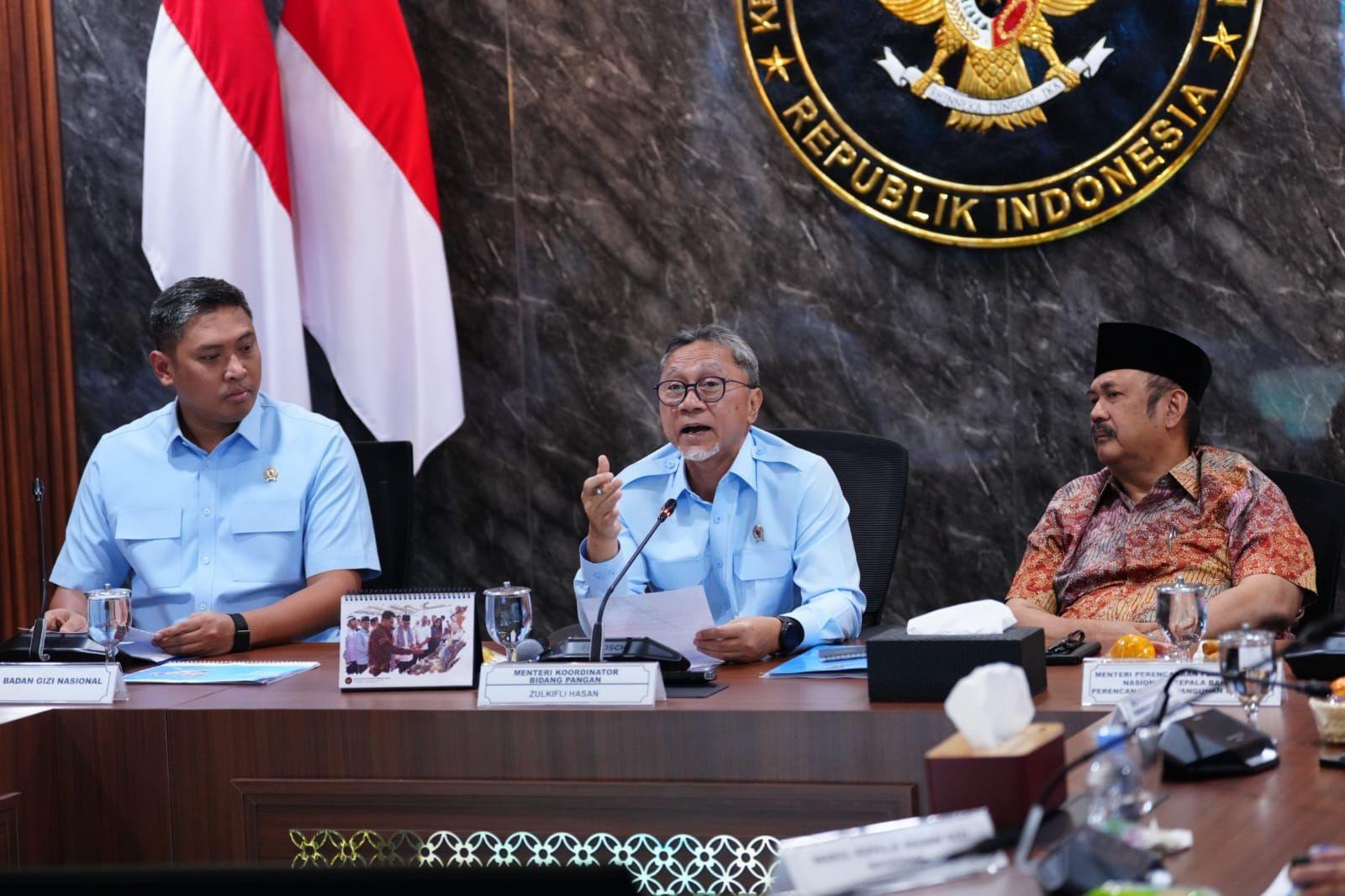
The decision was discussed at a limited coordination Meeting on the implementation of the MBG program, chaired by Coordinating Minister for Food Affairs Zulkifli Hasan on Wednesday (8/26).
Of all operating SPPGs, 3,515 units across 324 regencies and cities do not hold an SLHS: 3,060 SPPGs have not yet applied for the certificate, while 455 failed to meet its requirements.
“We are continuing to improve the MBG program. It is not simply about increasing the number of SPPGs or beneficiaries; the most important priority is maintaining the quality of implementation. Standards must be met and regulations must be followed. If the requirements are not fulfilled, we will take firm action,” Zulkifli said.
The Government is also tightening human-resources management for the MBG program. A total of 249 SPPG heads have been dismissed for various violations, including food-poisoning incidents, phishing cases, absences of more than 10 working days, and other disciplinary breaches.
In addition to tightening operational standards, the Government is organizing the expansion of the MBG program into underdeveloped, frontier, and outermost regions (3T) to improve targeting.
In the first phase, the Government is prioritizing the activation of 111 SPPGs across nine provinces, including six provinces in Papua, as well as in North Maluku, Maluku, and East Nusa Tenggara.
Areas with high stunting prevalence are being prioritized.
The Government is also strengthening its mechanism for determining MBG beneficiaries. Going forward, the National Nutrition Agency (BGN), rather than by individual SPPGs, will determine beneficiary targets. This policy is intended to improve program oversight and ensure that meals reach those most in need, especially the 3B groups (pregnant women, breastfeeding mothers, and children under five who are not yet in preschool), students at Islamic boarding schools and religious schools, and communities in 3T regions.
According to Ministry of Health data, the 3B category—pregnant women, breastfeeding mothers, and children under five who are not yet in preschool—includes a target of 21,985,314 beneficiaries. Distribution to these groups is carried out by Ministry of Population and Family Development/BKKBN.
“The direction is clear: the MBG program must continue to improve in quality and become increasingly well-targeted. We are evaluating shortcomings, improving its management, and prioritizing those who need it most. This large-scale program must continue to be refined based on field evaluations,” Zulkifli emphasized.
The Government has confirmed that evaluations of the MBG program’s implementation will be carried out continuously. Tighter SPPG standards, stronger governance, and clearer beneficiary priorities are intended to make the program safer, high-quality, better targeted, and more accountable. (Public Relations of the Coordinating Ministry for Food Affairs/DND – Public Relations of the Ministry of State Secretariat) (JAS/MEP)